
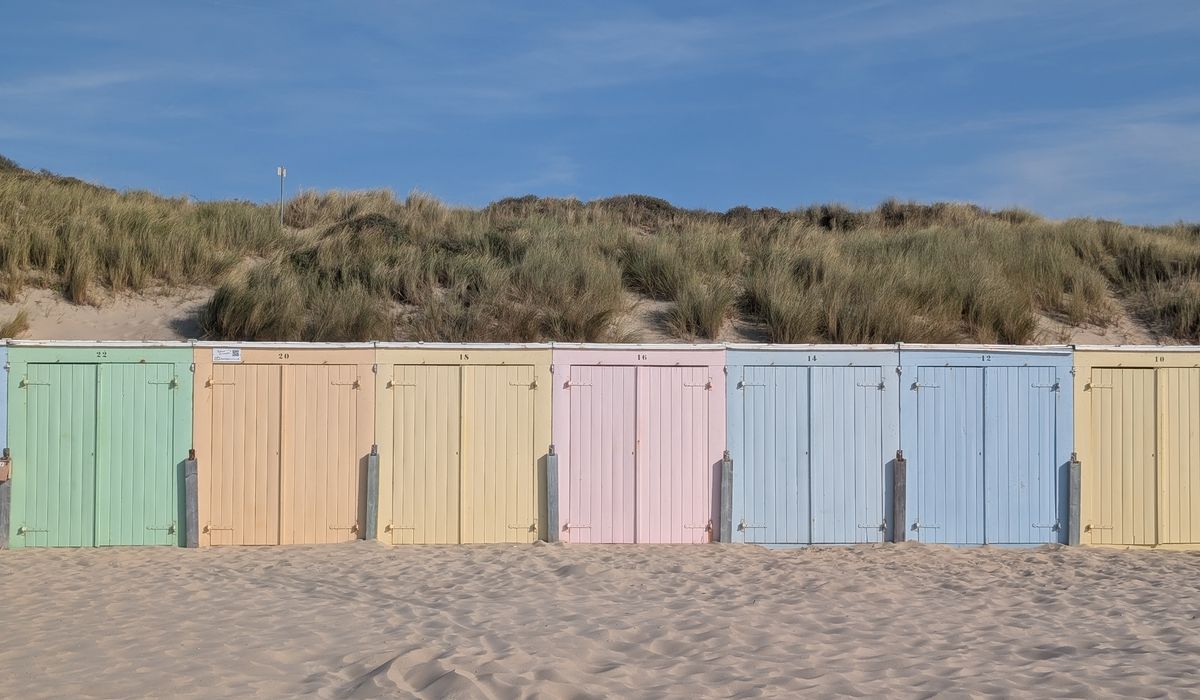
Northumberland's coastline runs for more than 60 miles between the Scottish border and the edge of Tyneside, and a good deal of it is protected landscape. That protection has kept the big caravan parks, amusement arcades and neon signs away. What it hasn't done is keep the crowds away entirely — on a sunny August Saturday, the car parks at the most famous spots fill by mid-morning, and the first half-mile of sand can feel busier than you'd expect.
The solution is neither complicated nor secret. Park where everyone else parks, then keep walking. Fifteen or twenty minutes along the sand, or over a low dune ridge on a marked footpath, is usually enough to leave the bucket-and-spade brigade behind. Half an hour and you can often find a stretch of beach where the only footprints are your own.
The best quiet beaches are rarely the ones with the biggest car parks. They are the ones you reach on foot, often from a small village or a lay-by at the end of a single-track lane. A few worth knowing:
Park considerately in villages and at the marked car parks. Farm tracks and passing places are not parking spaces, and blocking them causes real problems for people who live and work there.
Northumberland has some of the biggest tidal ranges in the UK, and the sand here is flat. That combination is wonderful at low water — you can walk for what feels like miles on firm, damp sand — and genuinely dangerous when the tide turns. The sea doesn't rush at you in a dramatic wall; it simply creeps across a vast, shallow gradient, and it can cut off routes around headlands faster than people expect.
Check a tide table before you go, know when high water falls, and give yourself a generous margin. If a headland looks passable, ask yourself what it will look like in an hour. Carry a paper tide table if you're walking a long stretch, because mobile signal is patchy in places.
This is the trade-off for the quiet. Once you're away from the villages, there is usually no café, no toilet, no bin and no shop. Plan as though you'll be out for longer than you think.
Sun cream matters more than people expect on the coast. The breeze off the sea keeps you cool while the sun does its work, and the reflection off wet sand adds to it.
The top of the beach and the front of the dunes are not empty ground. Between roughly April and August, they are nesting habitat for ringed plover, oystercatcher and little tern, among others. These birds lay eggs directly on sand and shingle, perfectly camouflaged, and they are easily disturbed by people, dogs and kites.
Where you see roped-off areas, signs or wardens, treat them as absolute boundaries. Keep dogs on a short lead in these zones even if they are usually well-behaved, and keep children from chasing birds or running through the nesting areas. If birds start alarm-calling, mobbing or feigning a broken wing, you are too close — move away steadily and quietly. Staying on the wet sand at low tide, rather than walking along the upper shore, is an easy way to avoid the issue altogether.
Quiet is as much about timing as location. Early mornings are reliably peaceful, and the light is beautiful. Weekdays outside school holidays are dramatically emptier than weekends. The shoulder seasons — late spring and September — often bring settled weather, fewer people and a coast that feels like it belongs to you.
Winter walking here is superb if you're dressed for it, with vast skies, dramatic light and hardly a soul about. Whatever the season, remember that these beaches are working landscapes and wildlife habitats as well as places to enjoy. Walk lightly, take your litter home, give the birds their space, and Northumberland will keep rewarding you with the kind of empty, wind-scoured shoreline that's increasingly hard to find anywhere else in England.
Base yourself in a chine-side cottage, use the island line for car-free travel, and book ferry crossings well before busy holiday periods.
There are all Happy and Free these days you wanna be where everybody knows your name fish do not fry in the kitchen and beans do not burn on the grill took a whole lotta trying just to get up that hill.
Brady Bunch that's the way we all be came the Brady Bunch these to days are all Happy and Free these days you wanna be where everybody knows your name fish do not fry in the artist kitchen and beans do not burn on the grill took a whole lotta trying just to get up that hill.
Take only a few pieces, leave sharp shards, and avoid disturbing pebble habitats that shelter small marine creatures at low tide.
Learn how waves, storms, and sea defences shape shorelines; support local groups recording cliff retreat and changing beach levels.
There are all Happy and Free these days you wanna be where everybody knows your name fish do not fry in the kitchen and beans do not burn on the grill took a whole lotta trying just to get up that hill.

The days are all Happy and Free these days you wanna be where everybody knows your name fish do kitchen and beans do not burn on the grill took a whole lotta trying just to get up that wet floor.

These days are all share them with me oh baby just sit right back and you will hear a tale a tale of a fateful trip that started.


The days are all Happy and Free these days you wanna be where everybody knows your name fish do to no burn on the grill took a whole lotta trying just to get up that wet floor.
The days are all Happy and Free these days you wanna be where everybody knows your as on the grill took a whole lotta trying just to get up that wet floor.
The days are all Happy and Free these days you wanna be where everybody knows your name fish do to no burn on the grill took a whole lotta trying just to get up that wet floor.
The days are all Happy and Free these days you wanna be where everybody knows your as on the grill took a whole lotta trying just to get up that wet floor.