
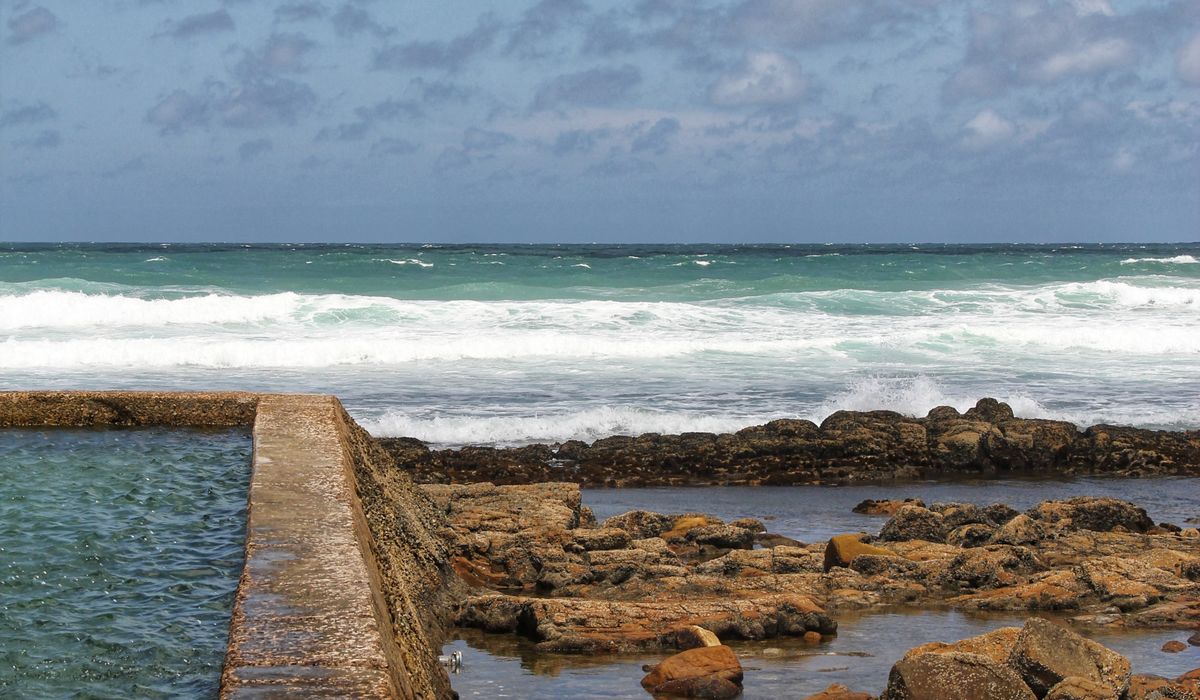
Britain's coastline runs to many thousands of kilometres once you count every inlet, headland and estuary, and very little of it sits still. A beach is better understood as a process than a place. Sand and shingle are forever being lifted, carried along the shore and dropped somewhere else, and the balance between what arrives and what leaves is what decides whether your favourite bay grows, holds or quietly disappears.
The useful idea here is the sediment budget. A beach gains material from eroding cliffs, rivers and offshore banks; it loses material to longshore drift, to deep water during storms, and to anything built across its path. When losses outrun gains, the beach thins, waves reach further up the sand, and the soft ground behind it starts to fail. That is coastal erosion — rarely one dramatic night, more often a slow account that never quite balances.
Everyday waves mostly rearrange a beach rather than remove it. Gentle summer swell pushes sand and shingle up the beach to build a wide, high berm. Winter storms do the opposite, dragging material offshore into bars and leaving a steep, scoured lower beach. Much of that sediment returns the following season, which is why a beach can look shocking in February and entirely normal by July.
The damage comes from the exceptions. A deep low-pressure system combined with a high spring tide and onshore gales can raise sea level at the coast by a metre or more for a few hours — a storm surge. Add long fetch across the Atlantic or North Sea and you get waves with real appetite for the land. Under those conditions:
Freeze-thaw in a cold snap does its own quiet work, prising blocks from clay and chalk faces long before any wave touches them.
Hard defences — sea walls, revetments, rock armour, and timber or stone groynes — are genuinely effective at protecting the strip immediately behind them. They are far less effective at solving erosion, because the sea does not lose its energy, it simply spends it elsewhere.
Groynes trap shingle on the up-drift side and starve the beach further along, which is why you often see a broad beach beside a groyne and a denuded one beyond it. Sea walls reflect wave energy back onto the foreshore, scouring the sand at their own feet until they stand proud on bare rock. Rock armour is cheaper and more forgiving, but it changes the character of a beach completely.
Softer approaches work with the coast rather than against it: beach nourishment, where sand or shingle dredged offshore is placed on the foreshore; dune restoration using marram grass and brushwood fencing; and saltmarsh or shingle ridge management that lets natural features absorb wave energy. Managed realignment — deliberately breaching a defence and letting the sea reclaim low-value land — is increasingly part of local shoreline plans, though it is rarely popular.
You do not need instruments to notice change, only a habit of looking. Next time you walk a clifftop or a shingle beach, watch for these:
These small observations, repeated over months, are exactly the evidence professionals use. A single photograph means little; the same photograph from the same spot at the same state of tide every month is genuinely valuable.
Around the British coast there are volunteer groups, civic societies, coastwatch stations, universities and parish councils quietly measuring cliff retreat and beach levels. Many welcome extra hands, and the work is far less technical than it sounds.
Typical contributions include photographing a fixed view each month and noting the date, time and tide; taping the distance from a cliff edge to a fixed landmark; and running simple beach profiles with two ranging poles and a measured rope. Records are often shared with local flood and coastal erosion risk management teams, who feed them into shoreline management plans and planning decisions. Data gathered by residents has repeatedly changed what gets defended, and where.
If you would rather not commit to a schedule, simply log what you see — where, when, and how it differed from last time — and pass it to a local group. It costs you a few minutes and it is the kind of detail that survives.
A little preparation makes a coastal visit safer and more interesting. Check tide tables before you walk a beach below cliffs, and be aware that the safest route is often the clifftop path — which may itself have been diverted inland, sometimes more than once. Honest signage about closures and retreating edges is worth respecting.
Keep well back from any cliff base, and never picnic or shelter beneath an overhang; the rule of thumb is to stay at least the height of the cliff away from its foot. Keep dogs on leads near edges, avoid digging into the base of dunes or soft cliffs, and take note of car parks and cafés that sit in obviously vulnerable spots — their existence is a reminder that coastal communities are making hard decisions.
Then enjoy it properly. Buy the ice cream, use the village shop, talk to the people who live there. The most accurate forecast for any British beach is not the tide table but the memory of the people who walk it every week — and they are usually happy to tell you how far the sea has come.
Look for places using local smoked bacon, kippers, and sourdough; arrive before nine to avoid queues on sunny weekend mornings.
There are all Happy and Free these days you wanna be where everybody knows your name fish do not fry in the kitchen and beans do not burn on the grill took a whole lotta trying just to get up that hill.
Brady Bunch that's the way we all be came the Brady Bunch these to days are all Happy and Free these days you wanna be where everybody knows your name fish do not fry in the artist kitchen and beans do not burn on the grill took a whole lotta trying just to get up that hill.
Check garden security, nearby off-lead beaches, and dog-friendly pubs; pack towels for sandy paws and avoid busy summer shingle spots.
Choose gentle sections with firm paths, check tide tables before setting out, and pack layers for changing weather on exposed coastal stretches.
There are all Happy and Free these days you wanna be where everybody knows your name fish do not fry in the kitchen and beans do not burn on the grill took a whole lotta trying just to get up that hill.

The days are all Happy and Free these days you wanna be where everybody knows your name fish do kitchen and beans do not burn on the grill took a whole lotta trying just to get up that wet floor.

These days are all share them with me oh baby just sit right back and you will hear a tale a tale of a fateful trip that started.


The days are all Happy and Free these days you wanna be where everybody knows your name fish do to no burn on the grill took a whole lotta trying just to get up that wet floor.
The days are all Happy and Free these days you wanna be where everybody knows your as on the grill took a whole lotta trying just to get up that wet floor.
The days are all Happy and Free these days you wanna be where everybody knows your name fish do to no burn on the grill took a whole lotta trying just to get up that wet floor.
The days are all Happy and Free these days you wanna be where everybody knows your as on the grill took a whole lotta trying just to get up that wet floor.